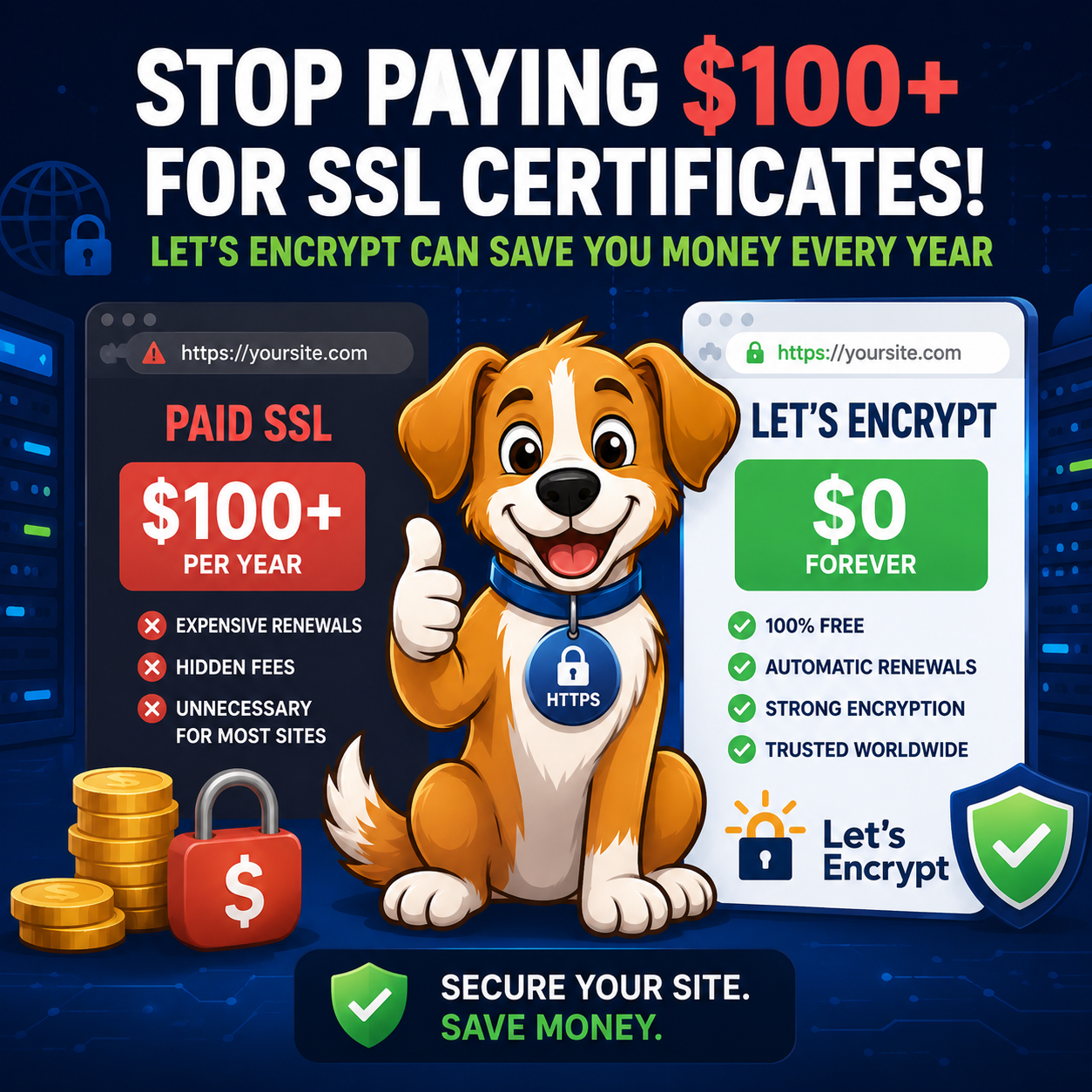
For years, web hosting companies convinced customers they needed to pay expensive yearly fees just to secure their websites with an SSL certificate. Website owners were routinely charged $50, $100, or even several hundred dollars per year for something that has now become widely available for free through Let’s Encrypt. Yet despite this major shift in the industry, many hosting companies still continue pushing overpriced SSL certificates onto unsuspecting customers — especially beginners launching their first websites.
This has quietly become one of the biggest hidden costs in web hosting.
Most people simply want the little padlock icon in their browser and secure HTTPS protection for their website. They don’t realize many hosting providers intentionally make the process confusing so customers assume they must purchase a “Premium SSL” during checkout. In reality, free SSL certificates from Let’s Encrypt provide strong modern encryption that is more than sufficient for the vast majority of blogs, business websites, portfolios, forums, and online projects.
The frustrating part is that many hosting companies already integrate Let’s Encrypt directly into their control panels. The technology is there. The setup is often automatic. But instead of clearly offering free SSL by default, some providers bury the option, upsell paid alternatives, or create unnecessary fear around security to increase profits. New website owners often end up paying yearly SSL renewal fees they never actually needed in the first place.
Over the years, I’ve seen countless people shocked when their hosting renewal invoices suddenly include expensive SSL charges on top of increasing hosting costs. What started as a “cheap” hosting plan slowly becomes overloaded with add-ons, upsells, backups, security packages, email fees, and SSL renewals. It’s one of the reasons I became so frustrated with the hosting industry and eventually created WebHostingReviewPlanet.com — people deserve transparent information before opening their wallets.
To be clear, there are situations where advanced paid SSL certificates make sense, such as large enterprise environments, specialized compliance requirements, or extended validation certificates for major corporations. But for most everyday website owners, paying $100+ every year simply to activate HTTPS protection is unnecessary in 2026.
Free SSL should already be standard everywhere.
The hosting companies that openly include free Let’s Encrypt SSL, simplify setup, and stop treating basic website security as an upsell deserve recognition. The ones still aggressively pushing overpriced SSL renewals onto beginners deserve more scrutiny. Website owners should understand exactly what they are paying for — and more importantly, what they no longer need to pay for at all.